Delivery in 8-10 daysDelivery in 5-9 daysDelivery in 6-15 daysDelivery in 7-10 daysDelivery in 9-11 daysDelivery in 12-14 daysDelivery in 8-10 daysDelivery in 4-7 days
Esta ha sido la selección de productos de Anti-Frizz de Kubo que te hemos propuesto. Descubre aquí todos los productos de Kubo que tenemos disponibles y encuentra el que mejor se adapta a tus necesidades. Si no encuentras un producto que se ajuste a tu necesidad háznoslo saber a través de nuestro formulario de contacto y te atenderemos con la mayor brevedad posible
The importance of having nourished hair helps to significantly reduce frizz, which can appear on curly, straight, wavy, greasy, normal, dry, and colored hair.
There are a wide range of anti-frizz treatments that help manage it so that it is healthier, more manageable and revitalized.
Types of anti-frizz treatment
Top hair care brands have been studying the problem of frizz for years, looking for a quick solution for every hair type.
Hair type
Recommended anti-frizz treatment
How to use it
Fine hair
Light serum or anti-frizz fluid
Apply a small amount to the lengths and ends, avoiding weighing down the roots.
Thick hair
Serum and a small amount of oil
Use the serum to control frizz and distribute a minimal amount of oil especially on the ends.
Curly hair
Leave-in, anti-frizz serum and small amount of oil
Apply the leave-in to hydrate and define, followed by the serum; finish with a little oil on the ends if necessary.
Very dry and porous hair
Conditioning treatment, leave-in, serum and oil
Use a richer routine, concentrating conditioning products and oil on the lengths and ends.
Controlling frizz doesn't necessarily mean making your hair perfectly straight. A good anti-frizz treatment can simply make the fiber more even and defined, whether you have straight, curly, or wavy hair.
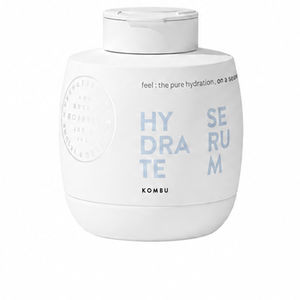
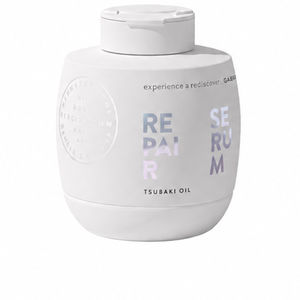
Anti-frizz serum
Anti-frizz serums are particularly interesting because they can be applied directly to the lengths and ends and left to act on the hair. Formulations may contain combinations of oils, polymers, conditioning agents, amino acids, heat-protective ingredients, and humectants.
Anti-frizz serum creates a surface barrier that reduces the fiber's interaction with humidity, limiting frizz. Among the most commonly used ingredients is amodimethicone, a functionalized silicone.
Anti-frizz hair creams
Anti-frizz creams are also particularly suitable for adding softness and natural movement to hair. Compared to a very light serum, creams generally have a richer consistency and can offer greater conditioning, proving especially useful for dry, thick, curly, wavy, or particularly porous hair.
Formulations may contain conditioning ingredients that help improve combability. The cream can be applied to damp hair, distributing it throughout the lengths and ends, or used in small amounts on dry hair to touch up frizzy areas.
For fine hair, it is best to choose a light texture and use a small amount, while for very dry and porous hair, a more nourishing formula may be useful.
Anti-frizz hair spray
Anti-frizz sprays are a practical solution for those seeking a lightweight, easily distributed product, suitable for everyday use. Compared to creams, sprays generally have a more fluid texture and are particularly suitable for fine, normal, or easily weighed-down hair, as well as for refreshing the taming effect throughout the day.
Applied to the lengths of the hair, they help reduce friction and make the hair's surface more uniform, helping to reduce flyaways and frizz. Some sprays are also designed as pre-drying products, especially when they combine anti-frizz action with heat protection.
To achieve a natural result, it's important not to overdo it. Distribute the spray evenly throughout the lengths and ends, avoiding saturating the hair. It can also be used on dry hair as a finishing treatment, especially on humid days.

 Vegan
Vegan Best prices
  Viral
Viral Flash
Flash









 (43)
(43)

 (196)
(196)